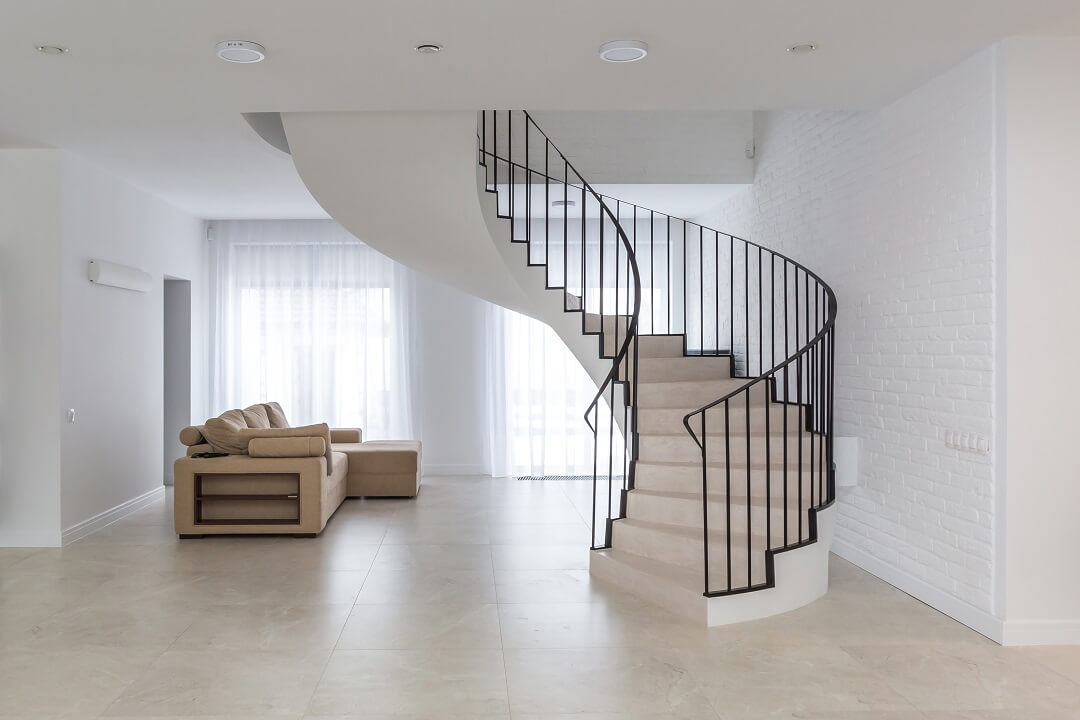
How to Organise a Home for Minimalist Living

Minimalist living is often misunderstood. It’s presented as stark white rooms, a suspicious lack of furniture, and a level of restraint that feels admirable but deeply unrealistic. For most people, that version of minimalism isn’t inspiring; it’s exhausting.
So, what does minimalist living actually look like when it’s designed for real life, and how do you organise your home to support it? Keep reading to find out.
Assess Your Current Setup
Before you start changing anything, you need to look at how your home functions. And we’re not talking about the version you imagine on a calm Sunday afternoon, but the version that exists on a normal, slightly rushed weekday.
Walk through each room and notice where friction shows up. Where do things naturally land when you’re tired, busy, or distracted?
Maybe the hallway collects bags, shoes, and unopened post, or the kitchen counter becomes the default storage area for everything that doesn’t have a clear home.
Ask yourself a few simple questions as you go. What feels awkward to use? What takes longer than it should? What do you find yourself constantly shifting from one place to another?
When something keeps ending up in the ‘wrong’ spot, it’s often because the ‘right’ spot doesn’t work.
This step is important because minimalist living isn’t about forcing yourself to behave differently. It’s about adjusting your setup so it supports your lifestyle.
Declutter Your Space
Once you’ve got a sense of how your home actually functions, you can move on to decluttering. This is the part many people dread, but it doesn’t need to be time-consuming or emotionally exhausting.
Your goal here is to remove the things that quietly make your space harder to manage. The items you don’t use, don’t enjoy, or barely remember owning still take up physical and mental space, even if they’re tucked away in a cupboard.
So, go room by room and be practical. If something hasn’t been used in a long time and doesn’t serve a clear purpose, ask yourself why it’s still there.
Be especially careful of those ‘just in case’ items. One spare can be sensible. Several spares usually just sit there, cluttering your space.
Duplicates are another common issue. Multiple versions of the same thing make storage more complicated than it needs to be.
In any case, try not to rush this stage. Decluttering well will make everything that follows easier, and there’s no prize for doing it all in one go.
Get Clever Storage Solutions
When it comes to storage, the goal isn’t to own more containers, but to keep the items you have in a place that’s obvious and easy to maintain.
Start with drawers. Shallow drawers are far more useful than deep ones because you can see everything at a glance.
In kitchens, bathrooms, and offices, drawer dividers work better than boxes because they prevent items from stacking on top of each other and disappearing.
For cupboards and wardrobes, shelf risers and pull-out baskets are your best bet. They help you make use of vertical space without turning your shelves into black holes.
Clear or open storage works best for items you use often. If you go for transparent boxes, open bins, or labelled baskets, you won’t have to remember what is stored there—you can see it immediately.
Most importantly, match your storage system to your lifestyle. For example, if you’re unlikely to fold things neatly, open bins will serve you better than drawers. After all, the best storage solution is the one you’ll actually use without thinking about it.
Upgrade Your Furniture
At this stage, it’s a good idea to look at your furniture with fresh eyes. Furniture plays a bigger role in minimalist living than people often realise, because it shapes how the space is used and how clutter builds up.
Well-chosen furniture can reduce the need for additional storage altogether. Pieces with built-in storage, like beds with drawers or sideboards with cupboards, keep things contained without adding visual noise.
Scale matters, too. Furniture that’s too large can overwhelm a room and limit how flexible it feels. On the other hand, too many smaller pieces can make a space feel busy and incohesive. If a room never feels ‘right,’ the furniture layout is often part of the issue.
But keep in mind that you don’t necessarily have to buy new things. Sometimes, removing a piece that isn’t earning its keep makes the biggest difference.
Add Some Breathing Room
Once you’re happy with your storage and furniture layout, you’ll start to notice something else: space. And in minimalist living, empty spaces are a defining feature.
Start with your surfaces. As a rule of thumb, at least 50–70% of any flat surface should remain clear. That includes your kitchen counters, bedside tables, coffee tables, and desks.
Next, look at the shelves. Your shelves should never be filled edge to edge. Instead, leave visible gaps between groups of items, and stop stacking objects in front of one another.
If you can’t remove one item without moving three others, the shelf is overfilled. To fix this, reduce what’s on display or move part of the category elsewhere.
Now, check the floor space. Each room should have at least one clear zone that isn’t broken up by furniture, especially in living rooms and bedrooms.
This will improve movement, make the rooms feel larger, and prevent the ‘everything is in the way’ effect that builds visual noise even when a space is technically tidy.
Make Cleaning a Habit
In minimalist homes, cleaning works best when it’s built into daily routines rather than treated as a separate chore.
You can do this by linking light cleaning tasks to routines you already have. For example, you can wipe your kitchen counter while the kettle boils, rinse the sink after brushing your teeth, or reset the living room before you sit down for the evening.
For deeper cleaning, set a fixed limit—ten to fifteen minutes once or twice a week is usually enough when your home is well-organised.
It’s also worth being realistic about your time. If your schedule is full, your energy is limited, or cleaning constantly slips to the bottom of the list, bringing in expert cleaners is often a smart choice.
Having someone come in regularly to handle the floors, bathrooms, and general dusting will keep your home fresh without you needing to carve out hours for it.
Accept Your Version of Minimalism
Finally, it’s important to remember that minimalist living isn’t a fixed look or standard. Your home doesn’t need to look like everyone else’s to be ‘minimalist enough.’
A family home will look different from a shared flat. A creative space will look different from a purely functional one. Minimalism allows space for hobbies, personality, and comfort.
If your home feels calmer, easier to manage, and more supportive of your daily life, then it’s working. So, just focus on what suits you rather than chasing an ideal.
Conclusion
Minimalist living isn’t about getting rid of all your decor or trying to live up to an unrealistic aesthetic. Instead, think of it as clearing the static, not silencing the music.
So, try out our hacks today and enjoy the satisfaction of having a space that supports your lifestyle.